Copper Hits a Record Above US$14,000 a Tonne — What It Means for Motor and Fan Costs
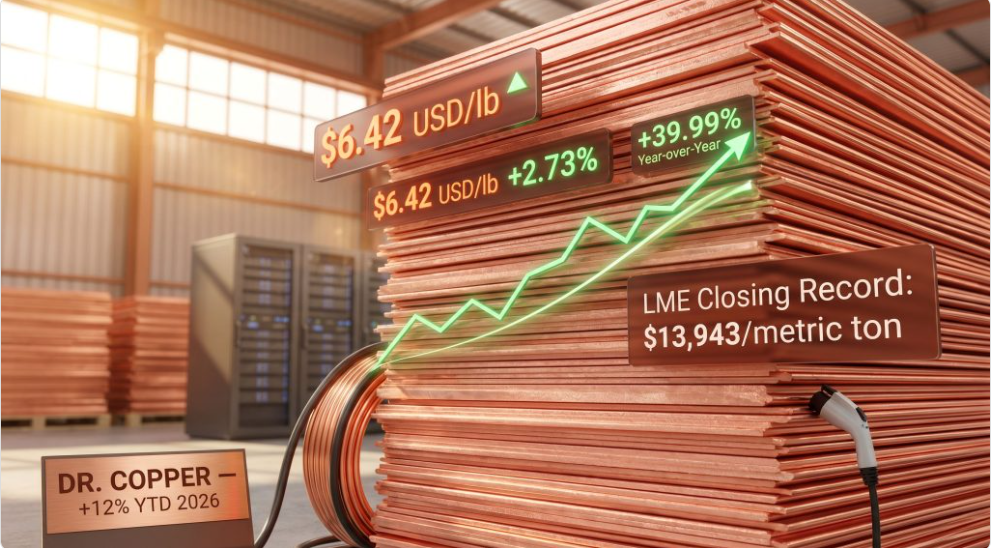
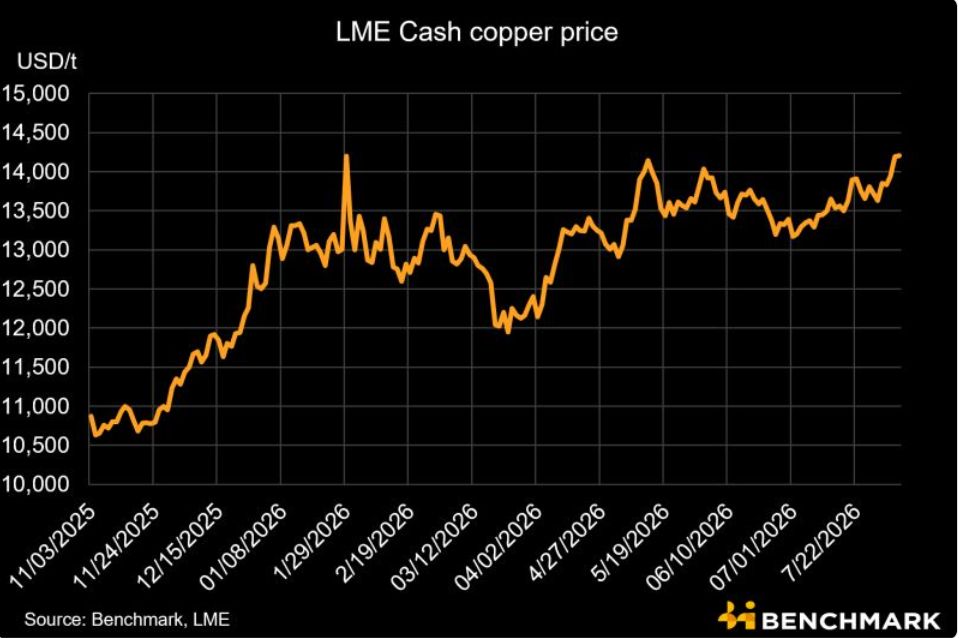
Copper has spent 2026 rewriting its own history books. In August the London Metal Exchange (LME) cash copper traded near US$14,500 per tonne, with the three-month benchmark above US$14,100, up nearly 14% for the year. The cash-to-three-month spread widened to US$434 per tonne — the steepest in five years — a classic signal that buyers are paying up for metal today because they do not trust tomorrow's supply.
Three demand forces are pulling at once: electric vehicles need roughly four times more copper than a petrol car; power grids run on copper; and data centres could account for around 475,000 tonnes of demand in 2026. The International Copper Study Group forecasts a 150,000-tonne deficit for
2026, the market's first structural shortage since 2009. LME inventories fell for a 42nd consecutive session to 204,975 tonnes.
For fan and motor makers, copper runs through motor windings, wiring and terminals. Every sustained step-up translates into higher unit cost on the same bill of materials.
2. The Cost Shock Landed on Appliance Makers First: Copper +18.6%, ABS +51.7%
The Chinese appliance industry became the first place where the copper rally turned into shelf prices. Comparing end-March 2026 with 2025 averages, industry data showed:
Input End-Mar 2026 Change vs 2025 average
Copper (heaviest use: air conditioners) RMB 95,195/t +18.6%
ABS plastic (appliance housings, fan blades) RMB 15,500/t (from RMB 8,000/t) +51.7%
Skyworth's white-goods unit raised wholesale prices for refrigerators, washing machines and air conditioners by about 10% from 1 April, saying rising copper and aluminium in Q1 plus the Middle East conflict had pushed oil and chemical feedstock costs up — a cost pass-through equal to roughly 10% of appliance product cost. Retailers in Hangzhou reported increases of 10%–30% landing in mid-to-late April, with kitchen appliances starting at 10%.
There is a catch, though: demand has not recovered. In the first 12 weeks of 2026, China's home-appliance retail sales fell 13.9% year-on-year and volumes fell 17.4%, according to NIQ GfK. Manufacturers therefore cannot simply pass costs on — which is why low-end models are the first to lose margin, and why sourcing teams are being pushed to redesign rather than re-price.

Plastic pellets: the main raw material for fan blades and housings.
3. Why Plastic Prices Jumped: The Hormuz Effect on the Plastics Chain
The ABS spike was not a demand story — it was a logistics and sentiment story. After the outbreak of the US–Israel–Iran conflict on 28 February 2026 disrupted shipping through the Strait of Hormuz, which carries roughly a quarter of global seaborne oil trade, prices across the plastics chain moved within days.
At the Zhangmutou plastics raw-material market in Dongguan — one of China's most important plastics trading hubs, handling about a third of South China's market — the South China plastics price index climbed from RMB 16,771 to RMB 19,817 by 9 March before easing to RMB 19,009, a gain of more than 13.34%. Within the same window, the ABS price index rose more than 18.3%, PP more than 16% and PC more than 15.8%.
Traders described upstream petrochemical plants sealing off quotations, cutting allocations, and in some cases cancelling or re-pricing previously agreed orders under force majeure. Warehouse handling fees, trucking rates and queue times all spiked at the same time. One important caveat for buyers: several interviewees noted that supply itself was not scarce — the surge was driven mainly by panic restocking and capital flows, and prices fell sharply again once crude oil retreated. Market participants warned the rally had "no foundation" in end demand.


